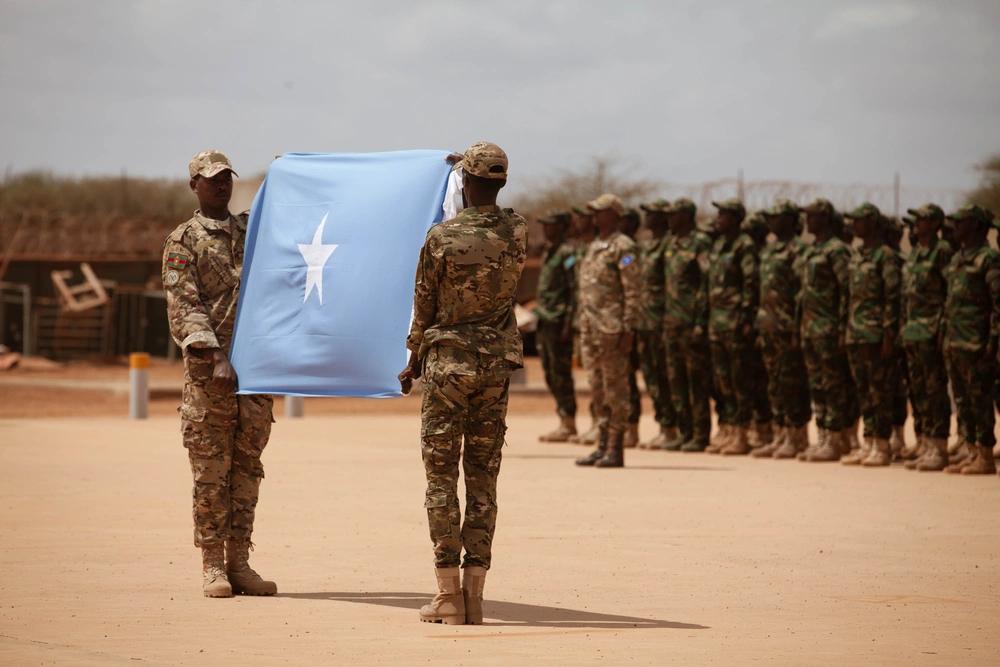
The Islamic State, commonly known as ISIS or Daesh, is a jihadist organization that emerged from the wars in Iraq and Syria. In 2014, the group proclaimed a so-called caliphate — a historical concept of Islamic political leadership — which it used as a framework to establish territorial control in parts of the Middle East. After losing its last strongholds in 2019, many believed the organization had been dismantled. In reality, ISIS did not disappear : it reorganized into a decentralized network and shifted its activities to fragile regions, including parts of Africa. One of the most significant areas of its recent expansion is Somalia.
Somalia : A Federal State Under Strain
Somalia is a federal republic composed of several Federal Member States. Each of these states has its own regional government and security forces. At the national level, a federal government based in Mogadishu, the capital of Somalia, is responsible for coordinating policy and security across the country.
In practice, however, cooperation between the federal authorities and the regional states is often limited. Decades of civil war, political fragmentation and institutional weakness have reduced the central government’s ability to exercise full control over the territory. This fragmented structure has created security gaps that armed groups can exploit.
While Al-Shabaab remains the dominant jihadist organization in Somalia, ISIS has gradually developed its own presence since the mid-2010s, particularly in the northern region of Puntland.
Puntland : A Strategic Stronghold
ISIS’s main area of influence in Somalia is Puntland, a semi-autonomous region in the north of the country. Its mountainous terrain, remote villages and limited state presence make it a suitable refuge for armed groups.
ISIS fighters have taken control of several strategic zones near Bosaso, a key port city that plays an important role in trade and logistics. These positions allow the group to move supplies, hide in difficult terrain and maintain communication networks. The geography also limits the capacity of Somali forces to conduct large-scale ground operations.
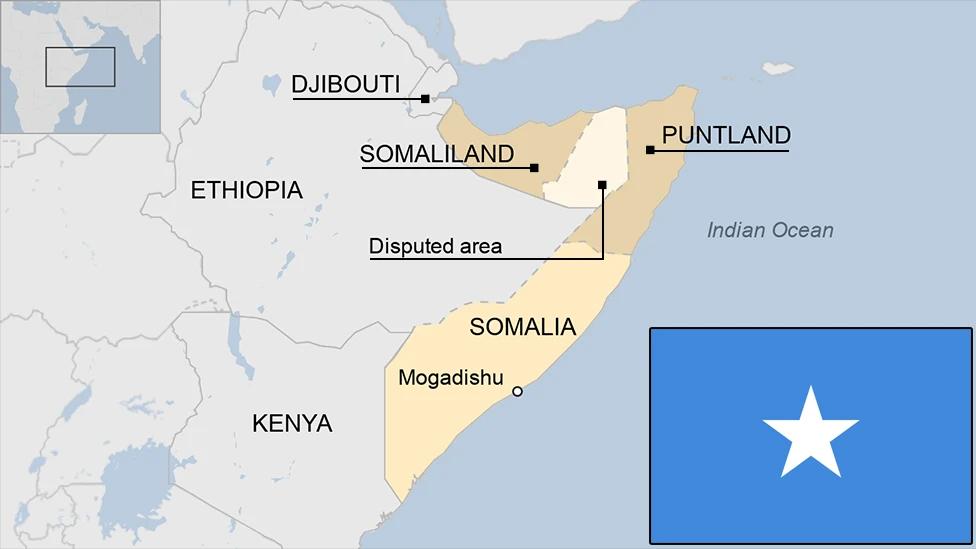
© BBC
Recruitment and Resources
The ISIS branch in Somalia is composed of both local recruits and foreign fighters who relocated after the collapse of the group’s territorial control in the Middle East. Together, they have rebuilt operational networks and financing systems.
Funding is generated through extortion, informal taxation of local populations and smuggling activities. In isolated areas, the group imposes its authority through intimidation and violence, reducing the space for civilian resistance and independent local governance.
Military Response and International Support
In late 2024, Puntland authorities officially declared open conflict against ISIS. Since then, Somali forces, supported by international partners, have relied heavily on aerial surveillance and targeted strikes.
According to data provided to AFP by a spokesperson for the United States Africa Command (AFRICOM), U.S. forces conducted 23 airstrikes in Somalia between January 1 and January 27, 2026 as part of a broader offensive against jihadist groups. The AFRICOM spokesperson attributed this increase in operations to an intensification of U.S. efforts against extremist threats on the African continent.
Some senior figures were killed but the group continues to adapt by dispersing its fighters and using caves and remote hideouts to avoid detection.
A Long-Term Security Challenge
The persistence of ISIS in Somalia illustrates how jihadist organizations evolve rather than disappear. Military operations, including the recent intensification of international airstrikes, have increased pressure on the group and weakened some of its structures.
However, while the military noose is tightening around ISIS, a battlefield victory alone will not mean the end of the threat. Without long-term political stability, economic development and effective governance, the conditions that allow such groups to survive will remain.


Laisser un commentaire